
If your business operates locally or aims to reach audiences in a specific geographical area, it’s important to go beyond generic instructions for improving search and social visibility. This article will walk you through various marketing tactics designed for enhancing local search and social media promotion.
Top SEO Tools for Optimization of Local Search
If your goal is to enhance your business’s performance in local search and social media marketing, employing SEO tools is essential. Here are some top choices:
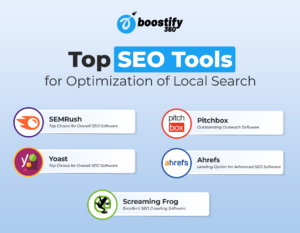
- SEMRush – Top Choice for Overall SEO Software
- Ahrefs – Leading Option for Advanced SEO Software
- Yoast – Superb SEO Plugin for WordPress
- Screaming Frog – Excellent SEO Crawling Software
- Pitchbox – Outstanding Outreach Software
Keyword Research for Local Search
Prior to optimizing your website, social media profiles, or anchor text for link building, it’s imperative to determine the keywords you intend to utilize. For local search marketing, your focus extends beyond industry-specific terms to encompass location-specific ones as well.
Consider a local plumbing enterprise with multiple Washington-based branches as an example. While devising their optimization strategy, their initial step might involve examining geo-specific keywords paired with “plumbing” to gauge the search frequency. This data could be gathered using tools like Google AdWords Keyword Planner.
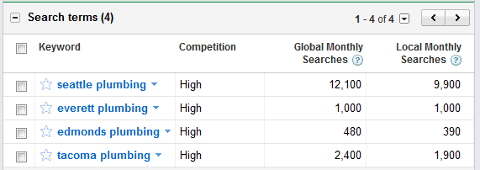
While the figures may not be precise, it’s evident that among the provided data, the search volume for “Seattle plumbing” surpasses that of “Tacoma plumbing.” However, “Tacoma plumbing” still enjoys more searches than the combined total of “Everett plumbing” and “Edmonds plumbing.”
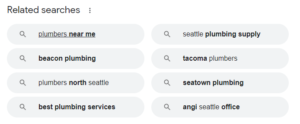
Looking to explore alternative means of generating keyword ideas? Attempt inputting your keyword concepts directly into the Google search bar, then scroll down to find the related searches. Engaging in experimentation with various Google searches can provide insights into optimal keywords and effective SEO practices.
Another approach involves examining the website of your foremost competitor (the one ranking highest for your primary target keyword phrase) to identify the keywords it ranks for, using tools like SEMrush.
On-Site Optimization for Local Search
Once you’ve chosen your keywords, the next step is to make your website work better for local searches. Tell search engines about the places you’re focusing on by adding location-specific info, keywords, and phrases in certain parts of your website, as explained below.
Title and Meta Descriptions
In search results, the first things people will notice about your website are the SEO title tag and meta description, or a related snippet from your site. To make the most of local search, follow these tips:
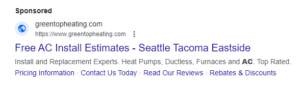
Optimize Title Tags for Local Searches – The SEO title tag remains a crucial aspect of on-site optimization. Although Google might sometimes pick different titles for search results, it’s important to assume that Google could choose the title tag you specify to link to your site in search results. Therefore, make sure it’s not only packed with your main keywords but also includes your location within 70 characters.
Optimize Meta Descriptions for Local Searches – While Google might opt for a piece of text from your site, having an optimized meta description is always beneficial. Ensure it features your primary keywords, the areas your business serves, and your phone number if possible, all within 165 characters.
Local Address & Phone Number on All Pages
Another effective indicator for search engines is having a local street address and phone number displayed on every page. Many businesses typically include this information in the footer of their website. Make certain that it’s presented as text rather than an image. This benefits both search engine bots and mobile users, as your phone number becomes clickable, facilitating easy contact.
Location-Specific Pages
Operating multiple locations with a single website? No worries. Simply craft a dedicated page on your site for each physical location. By doing this, anyone seeking your business within a specific region, city, state, or country will be seamlessly directed to the relevant page.
Create a Geo Sitemap
Want to ensure that Google has precise information about your location? You can achieve this by generating a geo sitemap and a KML file for your website using the user-friendly Geo Sitemap Generator. After entering your company’s information, simply download the files and upload them to the main directory of your website.
Subsequently, proceed to Google Search Console. If you haven’t added your website yet, do so now. You can verify the ownership of your website using your Google Analytics code or other available methods. Then, in the “Site Configuration” section, navigate to “Sitemaps” and submit the URL of your generated geo sitemap. Instead of relying on Google to discover your location, take the proactive step of providing it with accurate geographic details!
Local Search Directories
Google Search/Google Maps
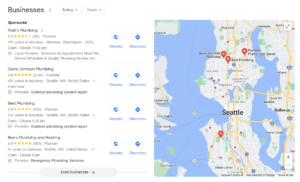
Begin by adding or claiming your business through a Google Business Profile. Fill in all possible information and include up to ten extra photos. Up to five YouTube videos can be linked to your profile to showcase your business. For home businesses targeting local clients, you can hide your address by choosing “Yes, this business serves customers at their locations,” and there’s an option to omit your address.
Upon profile completion and submission, you’ll need to verify your business. Verification methods include phone/SMS or a mailed postcard. Once your Google Places profile is live, encourage customer reviews and respond to them, showcasing your customer service skills.
While Google is vital, establishing profiles on other sites for local SEO is essential too. Consistent listings on various local search directories will enhance your local rankings.
Related: How to Rank Higher on Google Maps
Yahoo Local
In your pursuit of local search listings and citations, consider prioritizing Yahoo Local. This platform allows you to either add or lay claim to a listing without any cost. This listing encompasses essential details such as contact information, a link to your website, operating hours, accepted payment methods, email address, as well as a comprehensive overview of your products and services.
Bing Place
With Bing Places for Business, you have the opportunity to create or secure a complimentary listing for your enterprise. This listing offers the flexibility to include as many as nine images to showcase your business.
Verification is accomplished through the receipt of a Personal Identification Number (PIN), which can be obtained via phone, email, or even delivered to your business location. One noteworthy feature of Bing is its capability to aggregate reviews from various local search platforms.
Superpages
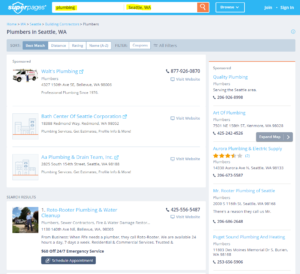
Superpages provides businesses with the option to either add or assert complimentary listings. These listings offer an extended business description, the ability to select multiple categories, a comprehensive compilation of products and services, an associated business image, and a direct link to their official website.
Why It Is Important to Claim Your Listings
For established businesses, they often have existing listings with their address and phone number. However, it’s crucial to still claim these listings. Why? Because many local directories lack effective verification methods to confirm the identity of those editing a listing. By proactively claiming your listings on key local directories, you safeguard your listing from unauthorized alterations or removal.
Getting Local Reviews
After claiming your business profiles on local directories, gaining reviews is key to enhancing visibility. Positive ratings can elevate your search ranking, especially on sites allowing sorting by positive ratings.
Here are tips for obtaining great local search reviews:
- Website Buttons: Include links on your website urging visitors to rate your business on platforms like Yelp.
- In-Store Encouragement: Place mentions or links to your listings on receipts in physical stores or restaurants to promote local reviews.
- Email Requests: Reach out to customers after purchases or via email, asking them to rate their experience on a chosen platform.
- Simple Requests: Interact with daily customers and ask for reviews – most will be willing
- Handling negative reviews is crucial. Respond individually on sites like Google and Yelp.
- Regularly monitor reviews (especially negative reviews) and address them promptly.
⚠️Unanswered negative reviews can raise concerns. Responding demonstrates your commitment to customer satisfaction.
By addressing negative reviews, you showcase your dedication to ensuring customer happiness, impressing potential new customers.
Link Building for Local Keywords
Once you’ve established your local business listings, it’s time to focus on link building for your website. Remember to avoid over-optimization, as Google penalizes excessive efforts. There are numerous effective ways to acquire links.
- Related Local Businesses: Identify non-competing businesses in your industry that have resource pages linking to similar businesses. Engage with the business owner to convince them of the value of adding your link.
- Local Bloggers: Connect with regional bloggers whose audience aligns with your business. Offer guest posts or products/services for reviews on their blogs.
- General Local Resource Pages: Discover local business resources beyond directories and explore opportunities for listing your site.
- Competitor Backlinks: Analyze competitors’ backlinks using tools like Moz Link Explorer. Secure listings on relevant sites linking to them.
- Local Events: Explore industry events, expos, or conferences in your area. If they link to exhibitors and sponsors, consider participating to gain a link.
- Local Charities: Support local charities through sponsorship or donations. Many charity websites acknowledge sponsors, offering valuable backlinks.
Local Social Media Optimization Tips
Maximizing your presence on social media platforms requires local optimization, interaction with relevant local businesses and users, and strategic use of networking groups.
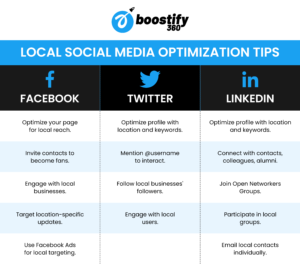
- Optimize your Facebook page for local reach.
- Invite your email contacts and friends to become fans.
- Engage with related local business pages as your page, commenting on their updates.
- Target location-specific status updates to a specific audience.
- Utilize Facebook Ads to reach a local demographic.
- Optimize your Twitter profile with a specific location and local keywords.
- Interact with anyone by mentioning their @username.
- Follow local businesses’ followers and participate in local discussions.
- Engage with users in your targeted local demographic.
- Optimize your LinkedIn profile by listing your accurate location and using local keywords.
- Invite email contacts, connect with colleagues, alumni, and join Open Networkers Groups for broad connections.
- Participate in local networking groups on LinkedIn.
- Email your local contacts individually or selectively, avoiding spam.
Conclusions
In today’s localized digital landscape, achieving effective visibility for your business requires tailored strategies that go beyond generic approaches. To excel in local search and social media marketing, the synergy of optimized practices and insightful tactics is essential. From optimizing your online presence to crafting precise keywords and building robust link networks, every step contributes to your local success.
Utilizing prominent SEO tools like SEMRush, Ahrefs, Yoast, Screaming Frog, and Pitchbox empowers your local optimization efforts. Keyword research, essential for local search, involves targeting both industry-specific and location-specific terms. On-site optimization, such as optimizing title tags, meta descriptions, and incorporating local address and phone numbers, enhances your local relevance.
Furthermore, employing local search directories like Google Places, Yahoo Local, Bing Places, and Superpages provides you with crucial visibility across various platforms. Capturing positive local reviews, coupled with addressing negative feedback, reinforces your credibility and customer trust.
Strategically building local links adds another layer to your online presence. Engaging with related businesses, bloggers, resource pages, competitor backlinks, local events, and charities for local link opportunities creates a well-rounded strategy.
Social media platforms, particularly Facebook, Twitter, and LinkedIn, offer immense potential for local engagement. Optimizing your profiles for local relevance, actively connecting with local businesses, participating in discussions, and leveraging local networking groups establish your brand’s local authority.
In essence, the fusion of local SEO and social media tactics, grounded in precise optimization and active engagement, is the key to standing out in your local market. By embracing these strategies, you are well-equipped to navigate the dynamic landscape of localized online marketing and ensure your business thrives within your target geographical area.