If you’re a local business owner, marketer, or agency trying to rank on Google Maps in 2026, you’ve probably noticed something frustrating – your rankings don’t stay the same. One moment you’re in the top 3, the next you’ve disappeared… and your competitor down the street is suddenly outranking you. Here’s the thing: Google Maps rankings are not fixed. They shift based on location, behavior, and dozens of real-time signals. That’s exactly where Boostify 360 helps – by tracking your exact rankings across your service area – giving you clarity into what’s changing, why it’s happening, and how to improve your visibility without guessing.
What Are Google Maps Rankings?
Google Maps rankings determine which businesses appear in:
- The Local Pack (top 3 map results)
- Google Maps search results
- “Near me” searches and AI-generated local recommendations
These rankings decide whether your business gets:
- Calls
- Directions requests
- Website clicks
Or gets ignored completely.
In 2026, rankings are no longer static positions – they are dynamic, personalized results influenced by where the searcher is standing, what they’ve searched before, and how your business performs online.
How the Google Local Algorithm Works
Google’s local algorithm evaluates businesses using a mix of AI-driven signals and traditional SEO factors.
At its core, Google is trying to answer one question:
“What’s the best business for this user, right here, right now?”
To do that, it analyzes:
- Real-time user location (GPS proximity)
- Search intent (keywords + context)
- Business relevance (services, categories, content)
- Trust signals (reviews, citations, backlinks)
- Engagement (clicks, calls, direction requests)
In 2026, AI plays a bigger role than ever. Google doesn’t just match keywords-it interprets intent, context, and behavior patterns.
Top Ranking Factors (Distance, Relevance, Prominence)
Google officially still uses three core factors – but how they work has evolved.
1. Distance (Proximity) – The Dominant Factor
This is the biggest shift in recent years.
- Google prioritizes businesses closest to the searcher
- Rankings can change dramatically every few blocks
- You may rank #1 in one area and #8 just a mile away
This is called “vicinity-based ranking”
Reality check: You’re not competing city-wide – you’re competing block by block.
2. Relevance – Matching Search Intent
Google evaluates how well your business matches the search.
This includes:
- Primary and secondary categories
- Services listed in your profile
- Keywords in your business description
- Website content alignment
If someone searches “emergency plumber near me”, Google favors businesses that clearly signal emergency services – not just generic plumbing.
3. Prominence – Authority & Trust Signals
Prominence measures how well-known and trusted your business is.
Key signals include:
- Review quantity and quality
- Review keywords (services + locations)
- Backlinks from local websites
- Brand mentions
- Overall online presence
A business with strong authority can sometimes outrank closer competitors – but only to a point.
The Role of Reviews, Citations, and Website Signals
Reviews (≈20% of Ranking Influence)
Reviews are no longer just about ratings – they’re content signals.
Google looks at:
- Keywords inside reviews (“best HVAC in Brooklyn”)
- Recency (fresh reviews matter more)
- Response rate from the business
- Overall sentiment
A steady stream of detailed reviews beats a high rating with no activity.
Citations (NAP Consistency)
Your Name, Address, and Phone number must match across:
- Directories (Yelp, Bing, Apple Maps)
- Social profiles
- Local listings
Inconsistent data = reduced trust.
Website Signals
Your website still plays a critical role:
- Location-specific pages
- Service-based content
- Internal linking structure
- Local backlinks
For example, a roofing company with separate pages for each service area often performs better than one generic page.
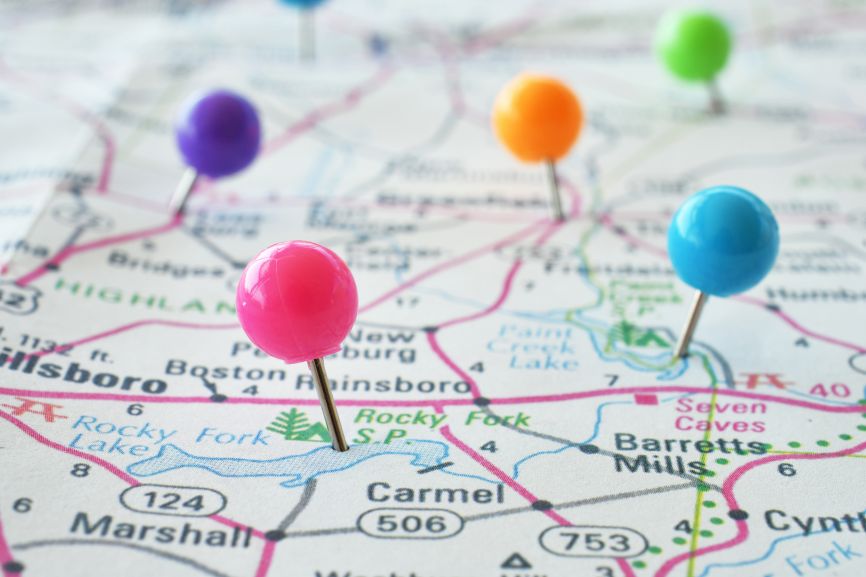
Why Rankings Change by Location (User Proximity Explained)
This is where most businesses get confused.
Let’s say you search:
“Coffee shop”
- At your home → one set of results
- At your office → completely different results
- Two streets away → rankings shift again
That’s because Google uses real-time GPS-based proximity.
What this means for you:
- There is no single ranking position
- Tools showing “#1 ranking” are often misleading
- Your visibility depends on where your customers are searching from
This is why tracking rankings across multiple locations is essential.
And this is exactly where Boostify 360 stands out – it helps you see ranking patterns across areas, not just a single static position, so you can make smarter local SEO decisions.
Common Misconceptions About Rankings
“I should rank #1 everywhere in my city”
Not realistic. Rankings are location-dependent.
“More reviews automatically = higher rankings”
Not always. Relevance and proximity still matter more.
“My ranking dropped, something is wrong”
Maybe – but often it’s just a location shift or user variation.
“Once optimized, I’ll stay at the top”
Nope. Rankings constantly change based on:
- Competitor activity
- New reviews
- User behavior
- Google updates
If your business isn’t showing up where you expect, here’s a breakdown of the most common reasons in our guide on Why You’re Not Ranking on Google Maps.
How to Improve Your Google Maps Rankings
Here’s what actually works in 2026:
1. Fully Optimize Your Google Business Profile
- Choose the right primary category
- Add all relevant services
- Write a keyword-rich description
- Keep hours and details updated
2. Generate Keyword-Rich Reviews Consistently
Encourage customers to mention:
- Specific services
- Locations
- Real experiences
Example:
Instead of “Great service” →
“Fast AC repair in Downtown Dallas during a heatwave”
3. Upload Photos & Videos Weekly
Google favors active profiles.
Post:
- Before/after images
- Team photos
- Job updates
- Short videos
4. Build Local Authority
- Get listed on trusted directories
- Earn local backlinks
- Maintain consistent NAP data
5. Optimize for Neighborhood-Level SEO
Stop targeting entire cities.
Instead:
- Create hyper-local content
- Focus on specific service areas
- Build relevance in smaller zones
6. Track Rankings the Right Way
This is where most businesses fail.
You need to:
- Track rankings across multiple locations
- Identify weak visibility zones
- Understand why competitors outrank you
If you’re guessing, you’re falling behind.
With Boostify 360, you can track your exact rankings across your service area , audit your listings, monitor visibility patterns, and uncover exactly what’s holding your rankings back – without wasting hours manually checking maps.
Final Thoughts: Rankings Are Fluid-Not Fixed
Google Maps rankings in 2026 are dynamic, personalized, and constantly shifting.
Success doesn’t come from chasing a single #1 spot.
It comes from:
- Understanding how rankings change
- Optimizing for real user locations
- Staying consistent with signals that matter
And most importantly – having the right tools to see what’s actually happening behind the scenes.