

How to Create an SEO Strategy for 2024 – [Updated]

The landscape of SEO is constantly evolving, with new developments emerging every day. Recognizing these shifts, Drew Fortin asserted, “SEO isn’t what it used to be,” echoing the sentiments of many experts in the field. Indeed, SEO is changing and the focus is shifting from keywords to the quality of content. It’s true – good quality content will rank higher compared to inferior content with high keyword density.

Good Quality Content with moderate keyword density is better than low quality content with high keyword density.

SEO experts and marketers have now realized that having a SEO strategy for one’s business is much more than just plugging the right keywords for optimum search rankings. There is much more involved. Let’s begin with defining what a SEO strategy is. 

Using MacBook Pro for making a SEO Strategy

SEO Strategy refers to the process of optimizing a website’s content by topic and using sorting mechanisms for giving the content proper structure so that it’s more appealing in the search results. Search engines love structured content and adopting a proper SEO strategy can help maximize organic traffic from search engines. A well-rounded SEO strategy removes confusion as it helps the content stay on track – you post what the user is searching for. Hence, the element of guess work is eliminated. 

SEO strategy can be considered as the first step towards designing/publishing content that performs better on the Search Engine Result Pages (SERPs). Remember this rule of thumb: if your content is unstructured, unorganized and lacks context, the indexing bots will find it difficult to index the sites, to accurately identify authority, and figure out your page’s ranking. 

Crafting a Mobile SEO Strategy
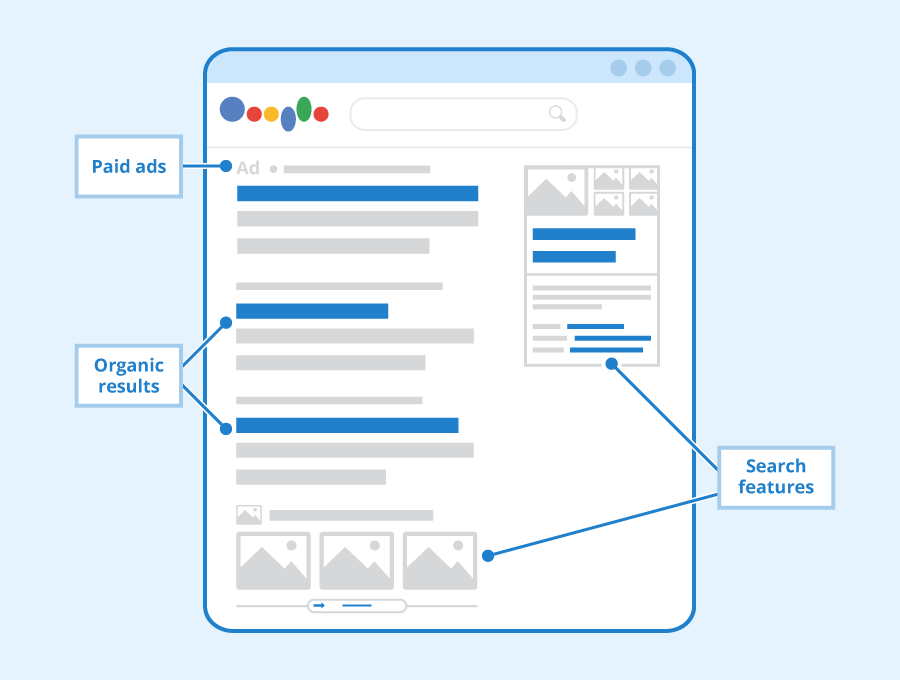
SERP - Definition and SEO Relevance - Seobility Wiki

In the realm of digital strategies, Mobile SEO stands as a pivotal element. Ensuring your website is optimized for mobile devices is crucial for providing seamless access and value to visitors, mirroring the desktop experience.

Mobile optimization has paramount importance due to Google’s adoption of mobile-first indexing. Rather than scanning desktop versions, Google’s algorithm now predominantly uses the mobile iteration of websites to index and rank pages for Search Engine Results Pages (SERPs). Notably, a substantial 61{b4d28b7a56ef539703f4f728176c915b79ae37d97877be1cf8dd9aa62923e927} of Google searches in the U.S. originate from mobile devices. Given these statistics, neglecting mobile optimization renders your SEO strategy ineffective.

While not an entirely distinct process, mobile SEO requires specific considerations. These include monitoring page speed, implementing responsive site design, focusing on local SEO, and generating high-quality content that ensures a superior user experience, regardless of the device in use. Prioritizing these aspects is fundamental to a well-rounded SEO approach.

What is SEO and Why it Matters? 

SEO professionals, also known as search engine optimizers (SEOs), specialize in optimizing websites to improve their rankings on Search Engine Results Pages (SERPs) and increase organic traffic. Essentially, an SEO serves as a highly skilled content strategist, assisting businesses in identifying opportunities, and to address the questions people have about their respective industries. There are three primary types of SEO that an SEO strategist can concentrate on:

What are some SEO tips, tricks or hacks? - Quora

  • On-page SEO: This type of SEO revolves around optimizing the content present on website pages to enhance the site’s ranking for specific keywords.
  • Off-page SEO: Off-page SEO focuses on securing links from external websites to the target website. The quality and quantity of backlinks from reputable sources play a significant role in establishing credibility with search algorithms.
  • Technical SEO: Technical SEO involves optimizing the backend architecture of a website, including site code and structure. Google places importance on technical setup as much as content, making this aspect crucial for rankings.

It’s essential to note that each business has unique objectives. Therefore, it is the SEO professional’s responsibility to analyze the industry, understand what matters to the target audience, and formulate a tailored strategy that meets their needs.

SEO Strategy for Beginners

The SEO industry is facing unprecedented changes in 2023. The emergence of search AI and AI-generated content necessitates the adoption of innovative approaches to stay ahead in the face of intense competition. The reassuring aspect is that the fundamental principles of SEO remain unchanged. Prioritizing the user experience is paramount. Always focus on assisting users rather than solely attempting to manipulate the algorithm. The objective extends beyond mere high rankings—it’s about delivering the right content to the right audience.

Conduct a Google Search for Your Company’s Main Term

If I were initiating an SEO strategy in 2023, my initial step would involve searching for my company’s primary term on Google. The “head term” describes a product, service, or topic one intends to write about. For instance, if I were launching Boostify360 for the first time, I would search for “marketing software,” our product’s head term.

Similarly, if I were starting a blog about publishing, I would search for “publishing blog.” Head terms generally have high search volumes, indicating they are searched frequently each month. Consequently, they are more challenging to rank for. In this step, the goal is not just to identify keywords but to comprehend the search landscape comprehensively. Observe everything displayed, including the suggested terms after entering your head term.

Using SEMRush for SEO Strategy

There is no necessity for advanced tools at this stage. Although tools like SEMRush can provide exact search volumes for a term and an estimate of its ranking difficulty, I would advise against utilizing them immediately. It is crucial to immerse yourself in the Search Engine Results Pages (SERPs) directly, considering that Google introduces new SERP features regularly.

I’m not solely referring to AI-generated results; features such as featured snippets, local packs, image packs, knowledge packs, and “People Also Ask” boxes can offer valuable insights to optimize your website later.

Explore Google’s Suggested Searches and Filters

Focus on the unique filters generated by Google for your head term, not the standard ones like “Images,” “Shopping,” or “Maps.” These filters are invaluable for answering essential questions:

  • What are people searching for related to your head term?
  • What would be most useful for them?
  • Does your product or service align with what people are seeking?
  • Can you provide a product page or article that people would find beneficial?

For example, if I were creating a product page for Boostify360, I could positively answer these questions. Boostify360 is free, suitable for small businesses, and valuable for digital marketing, addressing the searcher’s goals. However, I would refrain from immediate execution as I haven’t yet assessed the term’s difficulty in ranking.

Bear in mind that since head terms are highly competitive, your actual SEO strategy should focus on longer keywords, commonly known as “long-tail keywords.” Ideas for long-tail terms can be obtained by clicking on the filters beneath your head term.

Analyze the SERPs

Once you have identified a suitable head term and explored the filters, delve deeper into the SERPs. It is advisable to go several filters deep to get an approximation of a long-tail keyword. During this analysis, focus on the following aspects:

  • How many competitors are attempting to rank for this term?
  • What types of companies are ranking?
  • What is visible “above the fold” (the area visible before scrolling) on the page?
  • What SERP features are included by Google?
  • What types of pages and articles are ranking?


seo strategy: number of results


For a relatively long-tail keyword like “marketing software for small business,” I observed over 800 million results in Google. Although this might seem overwhelming, keep in mind that Google’s crawlers are proficient at discovering nearly any website related to a term and ranking it to address a searcher’s query. Therefore, the number of search results should not discourage you.

What demands closer attention are the elements within the results. For instance, the term “marketing software for small business” displays several SERP features:

  • Sponsored ads
  • “From sources across the web” product panels
  • A “People Also Ask” box

seo strategy: SERP features in marketing software

These features pose challenges for ranking due to increased competition, potentially leading to lower click-through rates. In response, consider searching for even more specific long-tail keywords or explore related searches and Frequently Asked Questions (FAQs) to identify relevant opportunities based on the same search intent. Search intent refers to the user’s objective when entering a keyword in Google. When someone searches for “best digital cameras,” Google shows various models, reviews, and prices, addressing the user’s intent to make an informed purchase.

Similarly, the SERP features for “marketing software for small business” cater to a single intent: a searcher seeking software to market their small business. Each SERP feature presents an opportunity to offer content to the same searcher. For instance, the “People Also Ask” box provides valuable questions, offering less competitive opportunities for content creation.

Tools like Answer the Public can also assist in discovering related questions and terms.

Evaluate Your Competitors

Once you identify a suitable keyword, shift your focus to analyzing your competitors. In SEO, it’s not just about your actions but also about understanding your competitors’ strategies and surpassing them. The landscape has changed, and it’s no longer solely about lengthy blog posts or numerous backlinks (although these remain important).

Google’s search algorithm has become more intricate, considering factors like website age, authority, user experience, and site structure. Traditionally, replicating all the competitor’s categories might have been a strategy. However, Google’s focus has shifted. It values authority and expertise. The goal is to demonstrate genuine knowledge rather than gaming the system.

Let’s consider the example of an author specializing in children’s fiction. The best strategy would be to create substantial content in the fiction domain, focusing on children horror stories. Overtime, this would create authority in the children+horror+fiction segment. This targeted approach aligns with the author’s expertise and establishes authority, which Google values.

Analyze your competitors’ pages, considering qualitative aspects such as their industry experience. Long-standing industry players should not discourage you. With a robust content SEO and backlink-building strategy, you can overcome challenges and reach the top of the SERPs, as demonstrated in the example.

Following competitor analysis, adopt a three-pronged approach: Authority, Content, and Backlinks.

Establish Online Authority

In the realm of SEO, content is essential, but it needs to be accompanied by backlinks. However, content and backlinks require the foundation of authority. Authority is paramount in modern SEO. It encompasses expertise, experience, and trustworthiness (E-E-A-T) and is outlined in Google’s Search Quality Rater guidelines. Google seeks assurance that you are qualified to provide information and that your product is genuine.

Create Content Optimized for Search Engines

This step represents the core of SEO strategy that typically comes to mind. All the research conducted earlier is now put into action, crafting content optimized for identified long-tail keywords. Most people use tools such as Ahrefs or SEMRush to discover potential keywords. The fundamental rule when creating content for ranking purposes is to prioritize humans over search engines. Think of it this way: the primary aim is to assist a person while subtly guiding the algorithm.

Incorporate the Keyword in the Page Title, H1, Text, Meta Description, and URL

Ensure the keyword appears several times on and off your page to offer cues to Google. Try integrating the keyword in the page title, H1, and the initial line of text at the page’s top. Additionally, include the keyword in the meta description and URL for comprehensive optimization.

  • Be Informative: Craft content that provides genuine assistance. Ask yourself: What would a person seek when landing on this page? Analyze SERPs and competitors to understand user intent fully.
  • Include Alt Text and Optimize Images: Image alt text remains an underappreciated method to enhance your page. Not only does it enhance web accessibility, but it also enables ranking in Google’s image pack and image results, thereby increasing website traffic.
  • Implement Internal Links: Post-content creation, internal linking is crucial. Internal links establish a network for Google to navigate. Despite Google’s intelligence, providing certain cues aids its understanding of topically related pages. Through internal linking, you indicate that numerous pages on your site are interconnected, demonstrating comprehensive coverage of specific topics. This not only signifies authority but also enhances user experience.
  • Cultivate Backlinks Content is indispensable, but it must be accompanied by backlinks. Even with an aesthetically pleasing, SEO-optimized website, Google won’t rank it unless you receive “votes” from other sites. Backlinks remain the most quantitative approach to establish authority within your industry. The more backlinks you garner, the more authoritative you appear to Google’s algorithm.

What are the top backlink strategies in 2023? 

Here are some favored backlink strategies:

  • Contribute guest blog posts to other publishers’ websites, linking back to your site
  • Develop useful content that other sites find valuable enough to link to
  • Publish original research attracting links from other publishers
  • Collaborate with companies on co-marketing initiatives
  • Participate in industry membership organizations, maintaining public profiles
  • Sponsor events and conferences

Conclusion

SEO in 2023 isn’t just about keywords; it’s about quality content and user experience. Good content paired with moderate keyword use triumphs over keyword-stuffed, low-quality content. Mobile optimization is non-negotiable, given Google’s mobile-first approach and the dominance of mobile searches. SEO professionals are content strategists, focusing on On-page, Off-page, and Technical SEO. For beginners, understanding the evolving SEO landscape is crucial. Research your keywords comprehensively, analyze competitors, and create well-structured, informative content. Prioritize authority, content quality, and backlinks for impactful SEO. In essence, SEO is about connecting with your audience, delivering value, and staying adaptable in the digital era. Mastering these principles ensures your online presence thrives amidst constant change.

Feel free to ask if you need more information or have specific questions about any part of the SEO strategy!

Related: