

Performing an Audit of Your Local SEO
When it comes to finding local businesses, services, or products, people naturally turn to Google in today’s consumer landscape.
Our smartphones serve as a gateway to fulfilling our daily wants and needs, whether it’s finding an emergency plumber, choosing a restaurant for dinner, or locating a groomer for our pets. For local businesses that are easily discoverable, Google searches translate into physical store visits and actual sales.
Conducting a local SEO audit allows you to ensure that you’re maximizing your visibility to capture as much local traffic as possible. It’s also an opportunity to identify and address any underlying issues that may be enabling your competitors to outrank you in local search results.
Initiating a local SEO audit for the first time can feel overwhelming, given the high stakes and numerous factors to consider. However, by approaching it in a methodical, step-by-step manner, you can transform this potentially daunting task into a more manageable one.
It’s essential to note that due to the frequent changes in local SEO algorithms, you will need to repeat this auditing process at regular intervals.
Why should you conduct a local SEO audit?
An audit involves a comprehensive examination of all the elements that contribute to your local search strategy and local pack ranking. It’s the only way to gain a clear understanding of your site’s performance, identify emerging issues, and uncover opportunities.
If your site experiences sudden drops in rankings or a significant decrease in traffic, conducting a local SEO audit can help you understand the underlying reasons behind these changes.
An audit is a systematic health check for your local SEO, helping you identify areas of concern without hasty and costly reactions.
What does an SEO audit include?
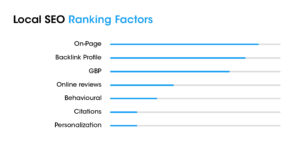
There are three crucial areas to consider within the local SEO algorithm:
- Proximity: How close or distant the search user is from your business.
- Prominence: The level of online visibility your brand has, which can be determined by factors such as inbound links, article mentions, reviews, and citations.
- Relevance: How well your business aligns with the search terms being used.
Local SEO Audit Checklist
Given the multitude of factors to review, it’s best to divide your checklist into different categories and analyze each one separately.
- Google Penalties
- Local keyword research
- Rankings
- Links and website authority
- Citations
- Reviews and ratings
- Social media
How to Conduct Your Local SEO Audit
To conduct an effective local SEO audit, create a spreadsheet or document with a dedicated section for each of the nine items mentioned above. As you complete each section, input the findings from your local SEO analysis to build a comprehensive audit report.
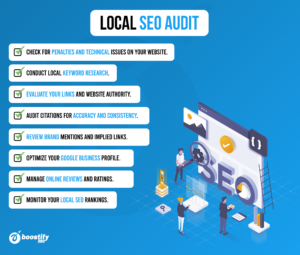
Check for Google Penalties
Google penalties can significantly impact your SEO performance. Surprisingly, only a small percentage of sites submit reconsideration requests after resolving the issues that triggered the penalties. As a result, many local business websites miss out on the opportunity to regain their lost rankings.
By checking for Google penalties at the beginning of your audit, you can avoid this oversight.
A drop in rankings doesn’t always indicate a penalty. This makes it challenging to determine whether you’re falling behind, need to adjust your strategy after an algorithm update, or are genuinely being penalized.
Common reasons for penalties include thin content, sneaky mobile redirects, user-generated spam, or an unnatural link structure associated with your site. If you are penalized, you will receive a notification in Google Search Console, where you can find details on why the penalty was issued. This information allows you to take appropriate steps to rectify the problem.
Perform Local Keyword Research
Since search terms for finding local businesses evolve constantly, it’s crucial to conduct keyword research regularly. Identifying new keywords enables you to update your local SEO strategy, ensuring that you target relevant terms and appear in relevant local searches.
Google Keyword Planner is a useful tool for suggesting keywords related to your business and providing insights into search volume. To access this tool, you’ll need to create a Google Ads account, which is a straightforward process. Additionally, Google Trends can provide further keyword inspiration by revealing search volumes and related queries based on your input.
Check Your Local SEO Rankings
As part of your audit, you need to determine where your site ranks for your target keywords. Keep in mind that local pack rankings function differently from the main organic search results, so it’s essential to conduct location-specific searches. Utilizing a rank tracker tool can automate this process for you.
Audit Your Links and Website Authority
The quantity and quality of links are significant factors in local SEO rankings. Therefore, they should be a crucial component of your local SEO analysis.
Your link profile is relevant to two of the three core pillars of local SEO: relevance and prominence.
During this part of the audit, you should develop a holistic view of your link profile by:
- Researching the number of inbound links you have to determine prominence.
- Assessing whether these links originate from high-quality and authoritative domains that are relevant to your business location or industry to evaluate relevance.
- Identifying any low-quality links that could be considered spam.
- Evaluating the anchor text to determine if it incorporates relevant keywords naturally and with sufficient variation.
- Identifying opportunities for organic link building to enhance relevance and prominence.
- Tools can help compile a list of inbound links, allowing you to assess the quality of your backlink profile based on the criteria mentioned above.
Once you understand your standing, repeat the same process for a competitor’s website. This comparison serves as a benchmark to evaluate your performance and identify new link-building opportunities for your site.
Audit Citations
Local citations aid Google in verifying your business details, increase prominence, and enhance relevance. Duplicate or inaccurate listings harm your local search visibility and inconvenience local consumers. These inconsistencies directly erode consumer trust and confidence in your brand.
According to the Local Citations Trust Report:
- 93{b4d28b7a56ef539703f4f728176c915b79ae37d97877be1cf8dd9aa62923e927} of consumers become frustrated by inaccurate information online.
- 80{b4d28b7a56ef539703f4f728176c915b79ae37d97877be1cf8dd9aa62923e927} lose trust in a local business if there are inconsistencies or inaccuracies in contact details or business information.
- 71{b4d28b7a56ef539703f4f728176c915b79ae37d97877be1cf8dd9aa62923e927} of local consumers report negative experiences resulting from incorrect information.
To optimize your search presence, it is recommended to review the top citation sites for your business and ensure that all data is accurate and up to date. If any discrepancies are found, they should be corrected promptly.
Audit Brand Mentions and Implied Links
Have you considered the impact of implied links or non-linking citations? Implied links refer to references of your business that don’t include a hyperlink but provide contact information such as your address or phone number.
Implied links can contribute to building prominence, making it essential to include them in your local SEO audit. Conducting a Google search for your business name can help identify all instances of implied links. Look for local news articles, blog posts, reviews, event listings, ebooks, white papers, industry news, and more.
Audit Your Google Business Profile
Your Google Business Profile, formerly known as Google My Business, provides Google and local consumers with valuable information about your business. It is crucial to stay updated with any changes made to your Google Business Profile, as it plays a vital role in your local search presence.
During your local SEO audit, systematically review each element of your business listing to ensure best practices:
Select the most appropriate category and subcategory for your listing.
- Monitor the frequency of posts updates.
- Review your Google Business Profile Insights.
- Verify that contact information, address, and opening hours are correct.
- Ensure that the public email address is actively monitored.
- Utilize the Question and Answers feature.
- Check if videos are being uploaded.
- Review your images.
- Respond to any unanswered reviews.
After auditing your own Google Business Profile, examine a competitor’s listing to identify areas where you can improve.
Related: Properly Establishing a Legitimate Google Business Profile
Audit Reviews and Ratings
Online reviews help attract consumers, establish trust, and drive traffic to your site. Review signals also impact local pack visibility.
During this part of the local SEO audit, compile a list of the top review sites relevant to your business. Review each site and take note of your average star rating. You can refer to the Google Reviews Study for industry-specific average star ratings to benchmark your performance.
Pay attention to reviews that haven’t received a response and consider the proportion of positive and negative reviews. Look for recurring negative feedback, such as slow shipping, check-in issues, or untidy stores, and document them as part of your review.
Fake reviews are a concern as they can undermine consumer trust in genuine reviews. Learn how to identify and report fake reviews to maintain integrity. Lastly, identify any review sites where you would expect to have reviews but don’t, as these represent review opportunities to include in your local SEO strategy.
Audit Your Social Media Presence
In the final stage of your local SEO audit, review your social media presence. While your local business doesn’t need to be present on every social network, it should have a profile on platforms that align with your target consumers. For example, a law office might not prioritize Instagram but should maintain an active LinkedIn profile.
During the audit, ensure that your “About” information, logos, and cover images are consistent across each network. Evaluate if each profile receives regular updates and if customer inquiries are promptly addressed.
Additionally, assess the social media presence of local competitors. Identify any features or tactics they utilize, such as giveaways, live videos, or stories, that you could implement into your own marketing strategies.
Concluding Remarks
By following these steps and documenting your findings in a spreadsheet or document, you can conduct a thorough local SEO audit that maximizes your visibility to local traffic and helps you identify and address any issues that might hinder your local search rankings. Remember to repeat this audit periodically to adapt to the evolving landscape of local SEO algorithms.
Related: Local SEO Strategies to Boost your Small/Medium Scale Business